

I hope January has been off to a wonderful start for you. Below you'll find my reflection on the last 100 days of building Due Dilly. It's been wild, super hard, and I wouldn't trade it for anything. Hopefully you can avoid and learn from a bunch of mistakes I made and steal some tactics that we've seen work for what we are working to build.
What We're Making:
The Due Dilly Show explores how deals happen, how money moves, through the lens of creators, operators, and investors. We use analysis, deep research, and context to illuminate things hidden in plain sight.
We serve 3 core audiences:
Creators who want and need infrastructure to grow their ideas and sustain their work.
Operators who need context and information they can use for what they are making and stay adaptable.
Investors who need to match capital to ideas, and are inundated with noise.
I can only write that, because of the last 100 days of rewriting it every other day.
The Season 1 Process
We planned out Season 1 in an Apple note.
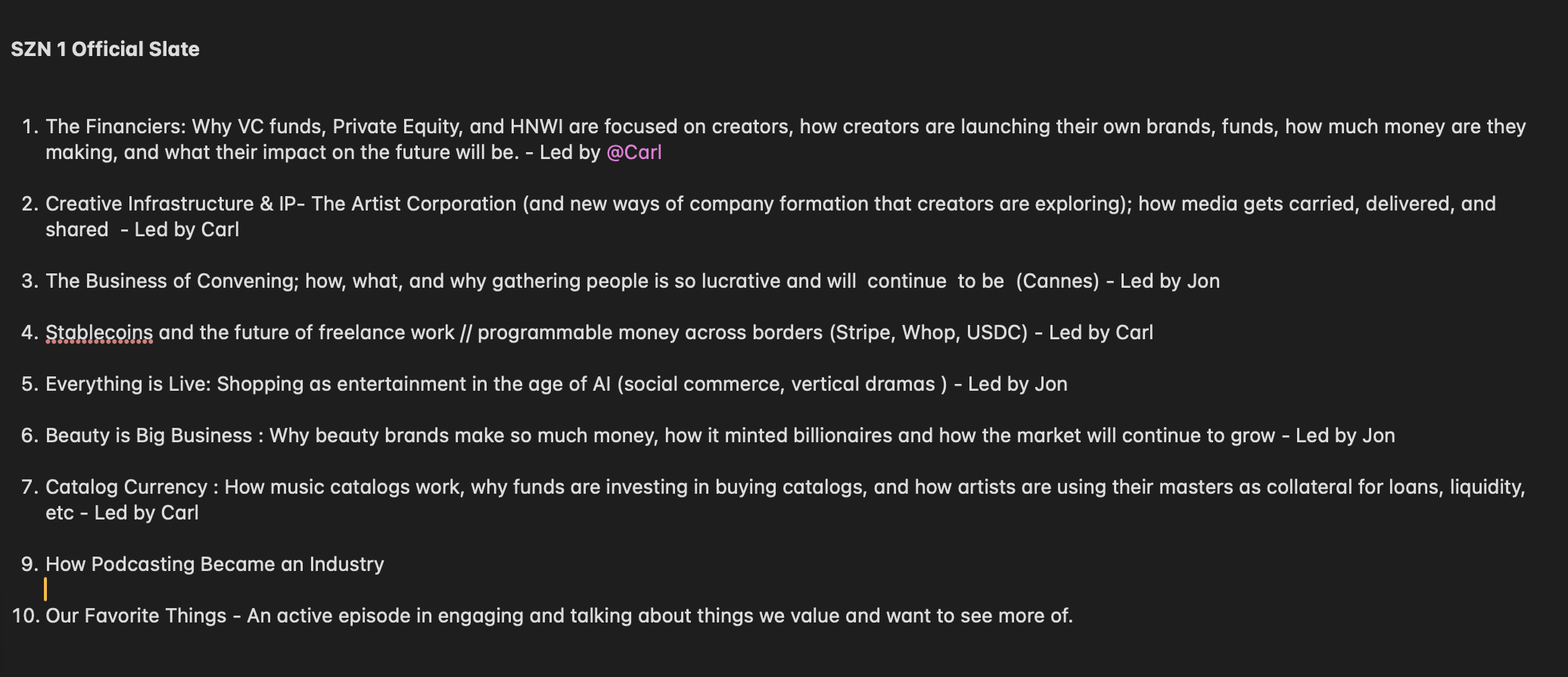
We wanted to test what resonated and have evergreen topics we believed would continue to be relevant at least 6 months after release.
The Team
We met our video editor Staphon in 2022, so he has institutional knowledge about the show, how we work, and our personalities, so he can make suggestions. He was behind our first episodes.
We have a short-form editor, Sean. who has helped shape our entire visual identity across Instagram. Outside of that, it's just me and Carl.
Finding Channel-Content Fit
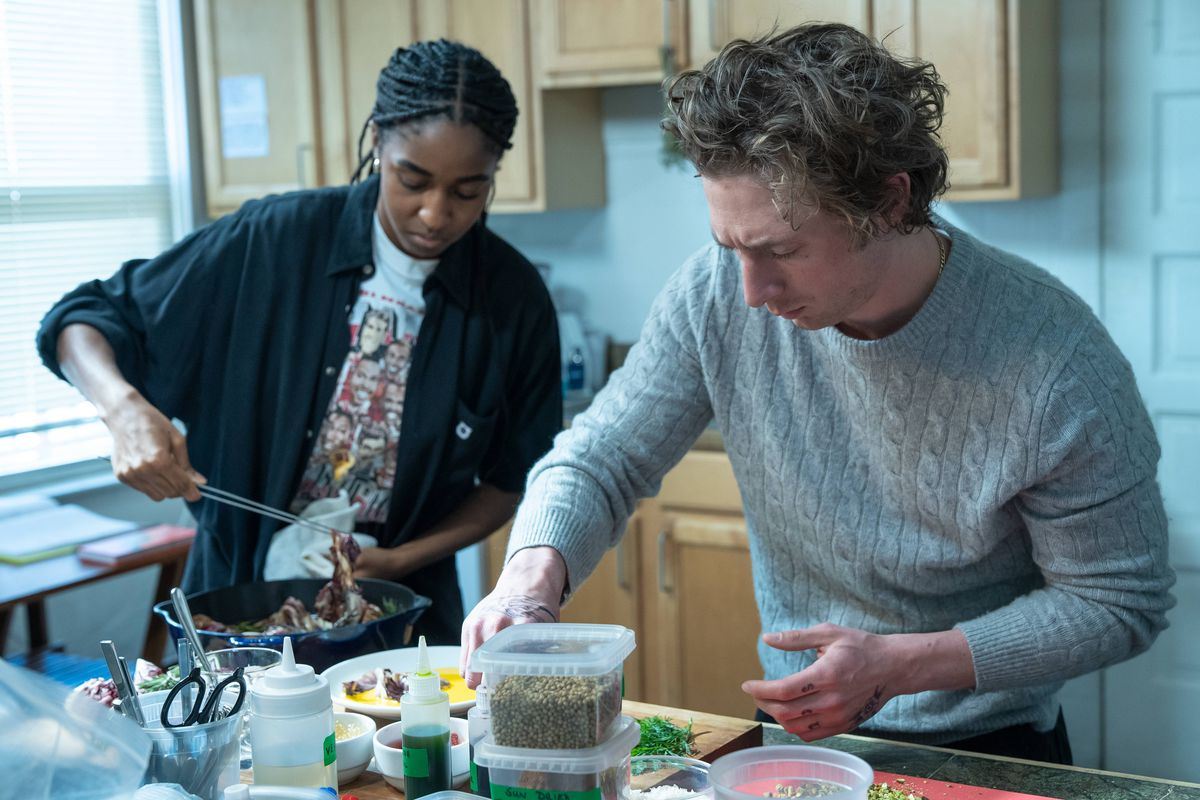
We made a decision that sounds subtle, but is very important. Due Dilly would be a show.
Shows have:
- repeatable formats
- workflows
- producer(s)
- recognizable signatures
- themes and introductions
So building a show for us is distinctly different than having a podcast. It gave us something to aim at, and to remain focused when other things came in the way. Also, it keeps us away from all the tactics that erode trust for the sake of cheap growth.
Using Instagram
Thesis: Make the best appetizers and serve them regularly.
IG is our tasting menu. Dense ideas, bite-sized delivery. Each reel we release is a as micro-experiments—low stakes, fast learning. Each reel is a condensed version of our core offering and lets us get immediate feedback in a specific context.
Instagram though is also about entertainment. You have to find what people want to hear from you, and then figure out where they want it
Key Stats:
- IG up 466% (helped by this viral post of Jackie Aina, more on that later)
- 41 reels (as of 1/28/26).
Using YouTube
Thesis: Full-course meal that is worth returning too.
YouTube is a packaging platform, not just a distribution one. Format, repeatability, and packaging matter as much (if not more) than what you say. You have to learn the constraints, then play inside them. We got the basics down, and need to begin optimizing for retention and increased watch time.
Key Stats
- 312 subscribers
- 580ish hours of watch time
- Average watch time is around 5 minutes.
What We Measured
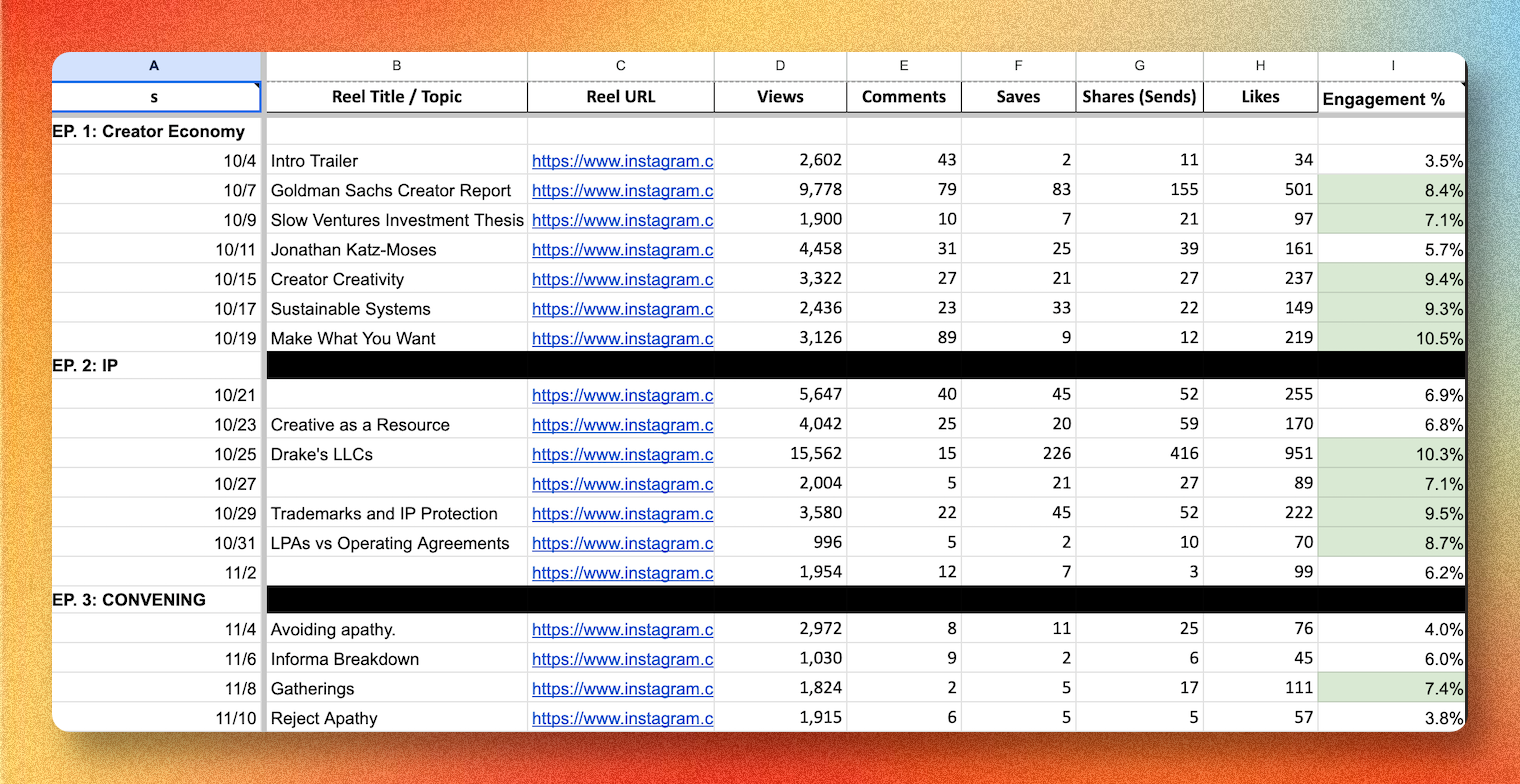
We measured two things over these 100 days, primarily on Instagram:
Lagging indicators = (views and reach). Good for setting a baseline, terrible for steering.
Signals = high intent behavior (saves, shares, DMs/texts). They guide what to double down, cut, or boost.
The Viral Moment
Everything we said was available in plain sight, but how we packaged it touched a nerve. Jackie has been on Youtube since 2009, and has a deeply loyal fanbase. She is what you could call inevitable: you can't talk about beauty in this era, and not mention her.
But what was interesting was the breakdown of the viewership after the reel caught fire.
Jackie helped a generation of women learn to do makeup, which maps pretty neatly on who engaged with it.
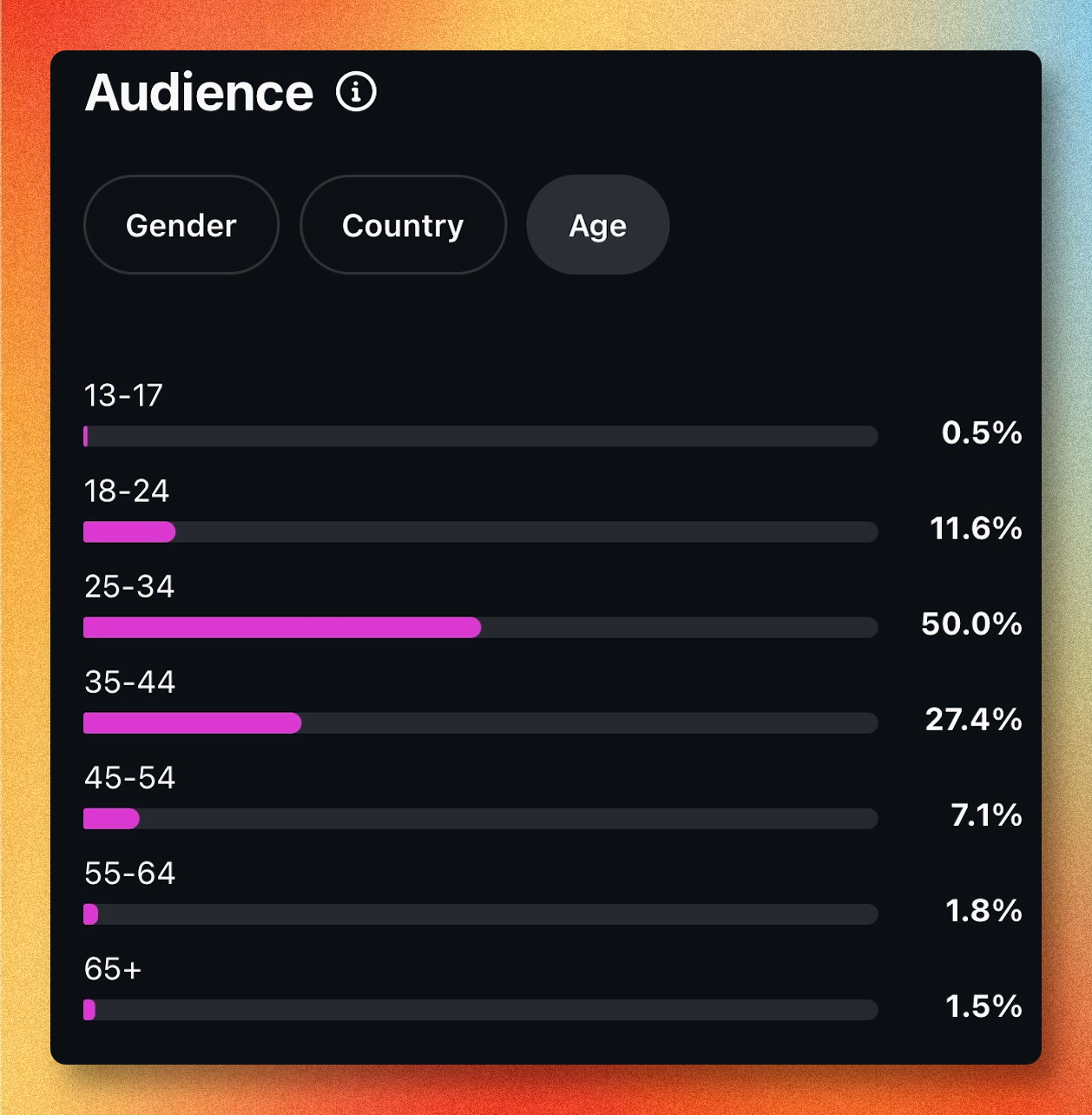
And in part where they consumed from:
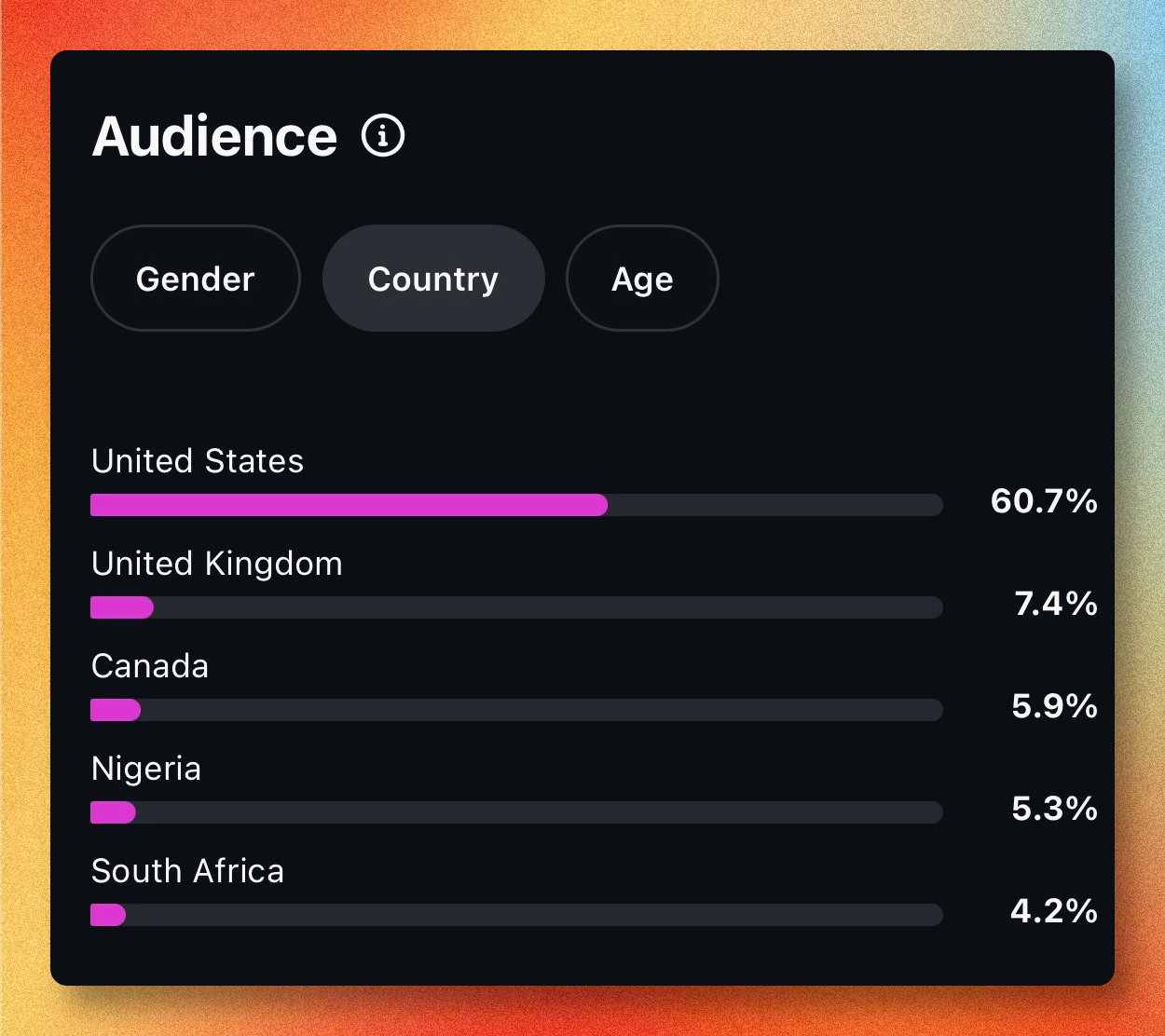
The velocity of this is around what it says, how it is packaged, and how it feels.
Formats Make Shows
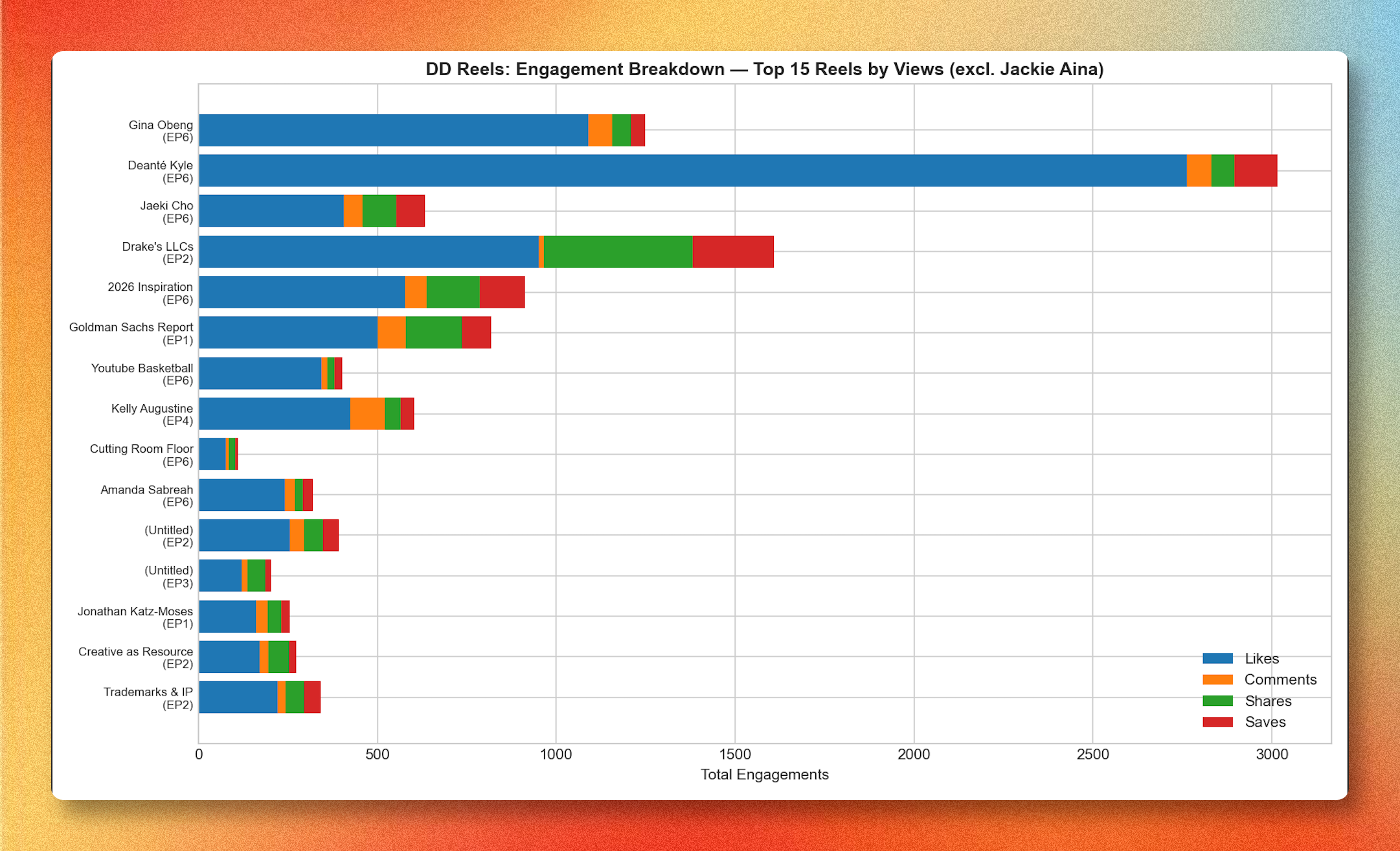
We recently encountered a format fit moment, with reels from our Favorite Things Episode on Jaeki Cho, Gina, and Deanté. They each have loyal audiences across categories (food, fitness, culture/politics respectively) that engage heavily with them on Instagram as a primary platform. Jaeki and Gina both collaborated on our reels, which connected it to the people who followed them, who discovered more about us.
Likes + Comments + Shares +Saves ➗ Total Views
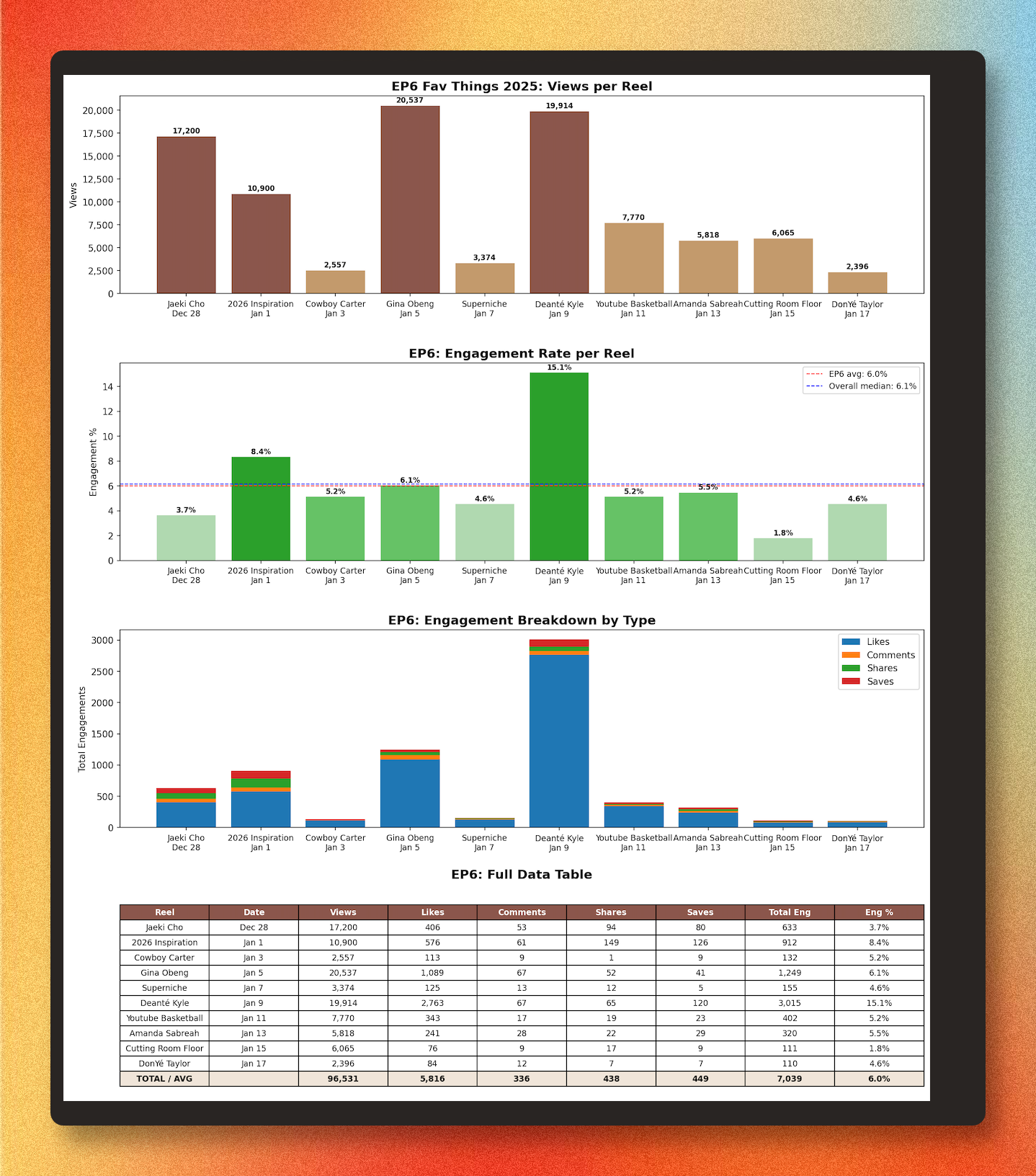
Key Takeaways:
- Shares and saves drive virality — our top-performing reels (Drake's LLCs, Jackie Aina) have disproportionately high share, comment, and save counts relative to their other metrics.
- Audience responds to who, not just what - This makes sense, but it is counterintuitive, because you might feel like something hits, but
- There's a clear spike-and-drop pattern within each episode — the first or second reel often gets a boost, then views decline. Not all reels are created equal and have different fandoms on Instagram.
- Repurposing: we haven't had the bandwidth to repurpose all the content we have in different places (and admittedly need help with it), but its a massive opportunity, because different platforms have different topics
A Minimum Viable Content System
4 tools form the base of our production:

Transistor for audio.
Riverside for virtual interviews.
Descript for transcripts.
Frame.io for reviewing footage and edit notes.
From there, we needed to find a way to make the most of what we made on limited time. Our process looks roughly like this:
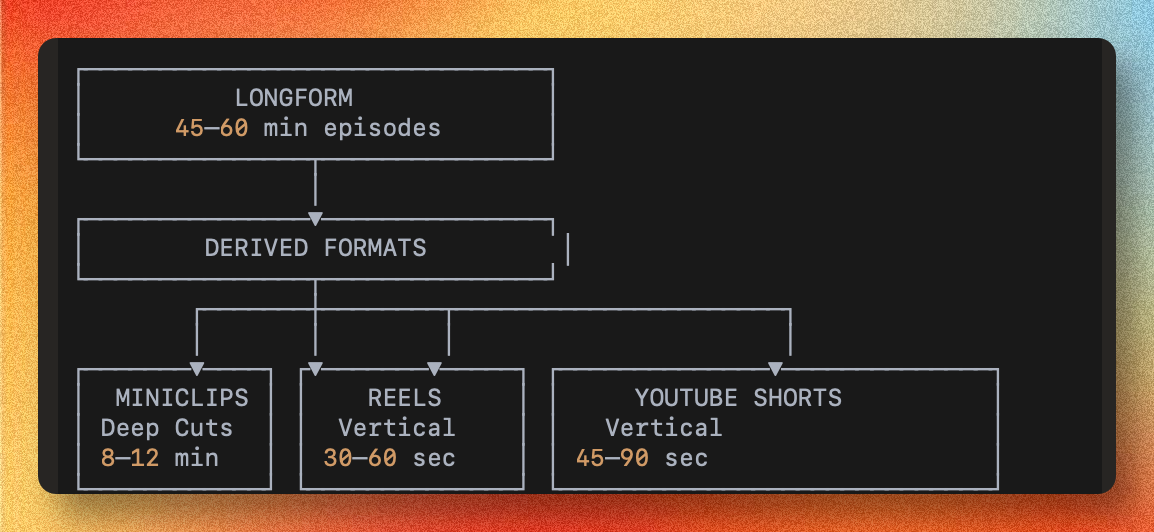
The math for this season is straight forward:
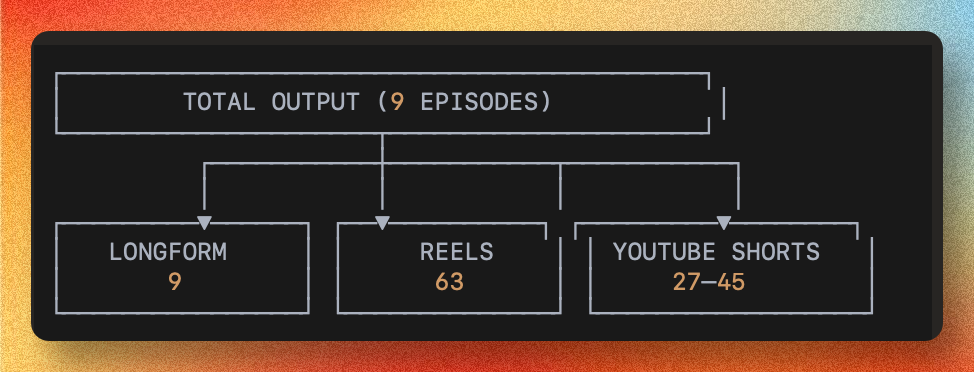
So, for every 9 things we make, we can multiply output 3x, and still keep salience. This helps us test more things, and make our own small factory so we can get the most out of what we make.
Stuff I Didn’t Do Well
- Episode Intros: way to long - its a show not an album interlude. Get to the point!
- Energy management: the making, the editing, and the promoting all take a different kind of focus, so burnout is around the corner if you are not careful.
- Did not design for my constraints: I get energy before we film, not after. I have to work on designing the system so I can recover not just so I can reproduce
- Lack of capture: we didn't have a layer for giving people something to do after they watched a reel
- Not separating the workflows: researching is not producing which is not promoting. Each of them requires a shift in focus.
- Too much overthinking, not enough playing: because I enjoy the process more than the promotion, we missed opportunities to just throw stuff out there
- Not critically ignoring enough: Learning what to listen to and implement, versus what to listen to and appreciate, or just ignore is something I am still adjusting into
Opportunities To Explore:
- Finding 'signature series' : We took the hard end, now there's a few more formats we can both collaboratively do that will have impact.
- Better packaging: on YouTube, a memorable format seems to be just as important as what you say. You have to prove the promise quickly. We're learning to find the right packaging for the ideas and the frameworks.
- Content-Platform Fit: We often find content-channel mismatch: something on Instagram that is a dud, can boom on LinkedIn because of the appetite. We have a big opportunity to test and learn in new places and learn.
- Physical media: So much of our lives now are ephemeral. We think things that you can touch and interact with are worth keeping and engaging with, and making something like that is exciting.
- Showing the process: Carl's been on me about this, but we have a lot to give out about behind the scenes
Notes To Myself
Not that you asked, but two books I highly recommend if you're going to building anything right now:
Quit by Annie Duke
7 Rules of Power
Efficiency and efficacy must be held in tension.
Efficiency = how well you use resources.
Efficacy = how well the thing works.
The most efficient process isn’t always the one that moves the needle. You can ship fast and cheap (efficient) but fail to resonate (inefficacious).
The most efficacious thingstoofor us (deep research, bespoke edits, clear inputs) have a heavy cost in time and energy, lowering efficiency, but they provide huge value in the long run. A mix of both is required when you’re starting out.
Thinking you “deserve an audience” (or that they owe you) is dangerous.
I am finding much more ease in treating what we do as invitational instead of a demand. If you see it as a privilege, you’ll find a way to endure the stuff that is required of you, and quit what isn't.
Find other things to pour into.
This can't be everything. There has to be something above what you make that gives your life definition. Find it, protect it, and cling to it.
Constantly doing something, it's not make you consistent.
The advice given has to be filtered through what you are solving and where you are finding people.
You either believe in abundance, or you perform it.
The amount of people who believe there is not enough, for a variety of reasons, is evidenced by what they will and will not share.
Nervous system regulation > almost everything else.
Making something in public will test what you believe about yourself, your value, and your abilities. You cannot outrun what your body is yelling at you about.
Cringe is courage.
Embarrassment is the cost for living out dreams. If you cannot bear that, then perhaps you prefer the regret of never trying. You will be required to choose.
The dip is unavoidable. Embrace it. Learn to cherish it.
If you come outside, you have to be able to stomach the dip. It comes for everyone. What made you great your career might make you insufferable on camera. There is no getting around it. Being a beginner is hard, for people who have had any taste of public success, because it demands you disrupt yourself and what made you comfortable.
Fear of repetition is avoidance.
If Nike continues to release the Air Force One, in the same color way, year after year, you should reshare core ideas. You are not that special.
Be militant about inputs; liberal with output.
What you take in will show up in what you make, so you should be sensitive to that, and open with what you share.
There's a language gap and a knowledge gap.
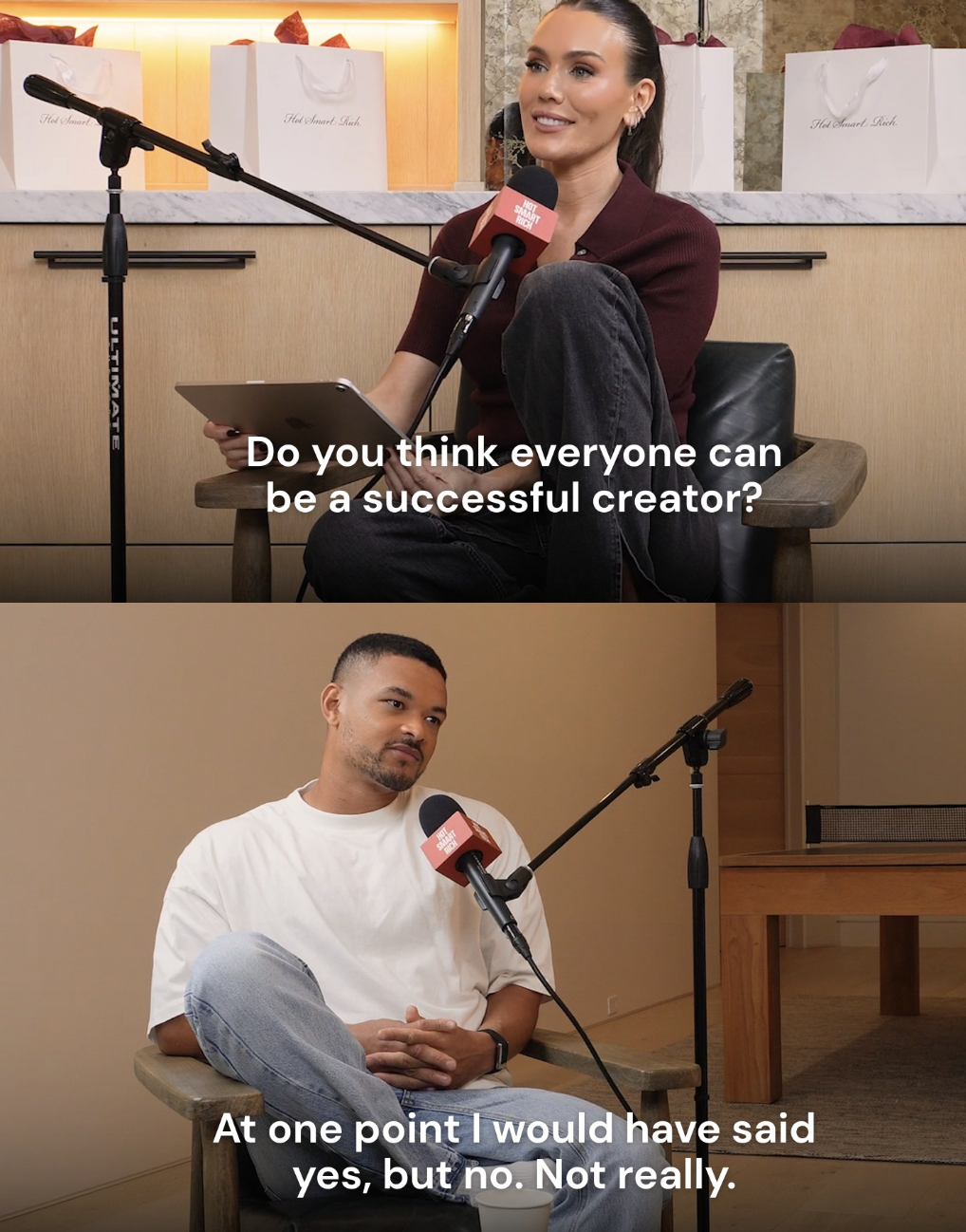
Depending on context, calling yourself a creator is a ceiling. There is still a preconceived notion about what that means, depending on the general sense of . In 2-3 years I think we'll just call them entrepreneurs and it will get bundled together, or
You will lie to yourself about quality as a reason to not share. Don't.
You have to take embarrassingly small steps over long periods of time to build anything. A relationship, a business, a gumbo worth eating.
Filters I’m developing to not lose my mind
Being a beginner again has made me susceptible to all kinds of manipulation and distrust. This is a bad cocktail because I believe it’s important to let yourself be influenced, but you need to pick what and why. Because I have insecurities about visibility, I tend to be easily swayed by tactics and tools that play on this reality. So I have had to develop a few tools:
- Is there n > 1?
In a research study, n= the number of people who participated. If a person is speaking to me about results, and their n is only themselves, I love it, but I can’t necessarily use it for the show. Anecdotes are great but they have to be filtered through what I am trying to do. One of the tells is a lack of curiosity and an unwillingness to say "I don't know".
2 . Are they good enough to tell me how they do it?
Former NBA player Isaiah Washington tells a story about Kobe Bryant teaching him to watch game film, the year he averaged 29 points. He used to just watch his own film; Kobe taught him how to watch every other player on the court. I think about that whenever people present secrets they are afraid to teach, because they think the magic is in what they learned. If you can't give it away and still earn from it.
3. Do I want their outcomes?
This is something to be really clear about. A lot of times, I just want the experience, so I have to recalibrate from taking their advice to looking at their system, and seeing what I can keep.
2026 Focuses - PBS for Business
- Make the show sustainable.
Sustainable means that it pays for itself and allows us to make only what we can, in the ways we know, for the people that need it and want it. - Grow this newsletter to 5000 people.
That's about the venue size of Radio City Music Hall, which feels like a healthy size.
3 Have 4 IRL events that bring together our people.
Creators want and need infrastructure. Operators need increased context to navigate. Investors and capital need to find new ideas. These groups are disincentivized from spending time together, and are often goaded into thinking the worst about each other. Plus you can't prompt your way into connection.
4 Collaborate across borders.
Because of what we do and how we do it, we can be embedded into almost anything and speak clearly about it. We don't have a lane, we have a perspective we invite people into. We need to scale that more aggressively.
We'll see what happens next.